
The Italian rocket manufacturer Avio announced the signing of two new contracts for the launch of the Vega C rocket for a total amount of more than 100 millions of euros. According to the terms of the agreements, launches will be performed between 2028 and 2031 for years, indicating the possible operation of Vega C until 2031 year and raises questions about the timing of the appearance of its successor Vega E and the next rocket Vega Next.
Today Vega C is operated in Block configuration 1 with a P120C solid fuel booster as the first stage. European Space Agency (THIS) 19 in December announced the completion of the qualification review of the more powerful P160C accelerator, which will become part of the Block configuration 2 Vega C. The first flight with the new accelerator is expected in 2028 year, which also confirms the long-term use of the Vega C.
Initially, the first flight of the Vega E was planned for the end 2026 year, then transferred to 2027 year. Vega E will be the successor of Vega C, retaining the first two degrees of Block 2, and the third and fourth will replace one stage with MR10 methane/oxygen engines. The new device promises to increase the payload by 20% when the cost is reduced by the same percentage.
Unlike the Vega C, Vega E will launch from the former Ariane launch pad 5, which requires adaptation to a smaller rocket. In December 2024 ESA awarded Avio two contracts for a total of 350 million euros to accelerate Vega C launches and complete Vega E development, at the same time close 85% funding goes directly to Vega E. In addition, ESA member states allocated more 47,82 million euros for the development of Vega E.
In the future, Avio plans to bring Vega Next to the market as early as 2032 year. The rocket will use technologies from the Space Transportation System program (STS) with MR10 and MR60 engines, including elements of reusable technologies, which will be the company's step towards future innovative launches.
It remains uncertain at this time, when exactly Vega E will be put into operation, how long it will work together with Vega C and when Vega Next will be launched. Despite the investment of more than 300 millions of euros, the lack of clarity about Vega E's role raises questions about its long-term value and place in the European space program.
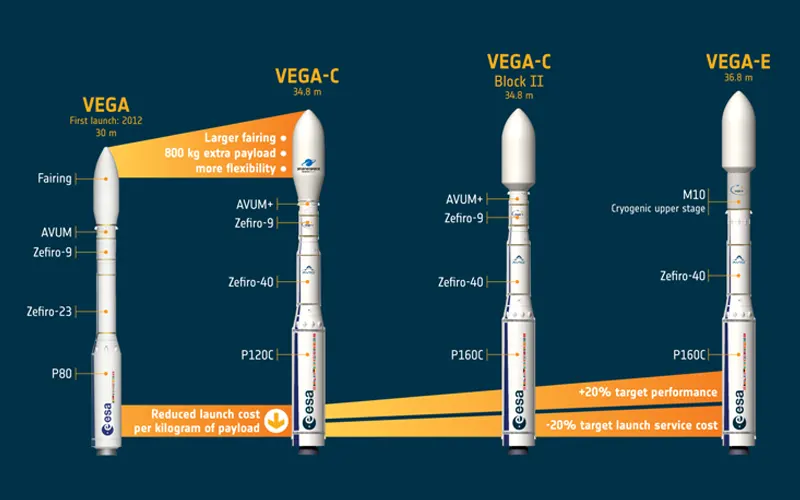
Source: https://europeanspaceflight.com