
Satellite images indicate severe damage to the Fordow nuclear facility after the US attack. Experts cannot confirm the extent of destruction due to the deep location of the object, but suspected Iran's export of enriched uranium before the blow.
Commercial satellite images show, that US attack on Iranian nuclear plant in Fordda seriously damaged – and, perhaps, destroyed – a deeply buried uranium enrichment facility and centrifuges, who were there, but there is no confirmation of this, experts said on Sunday, Reuters reports.
Confirmation of underground destruction could not be obtained, notes Decker Eveleth, Research Fellow, CNA Corporation, which specializes in satellite imagery. A room with hundreds of centrifuges “buried too deep, so that the level of damage can be assessed based on satellite imagery”, – he said. To protect against attacks, similar to that, which was carried out by American forces early Sunday morning, Iran has hidden most of its nuclear program in fortified sites deep underground, including in the slope of the mountain in Fordo.
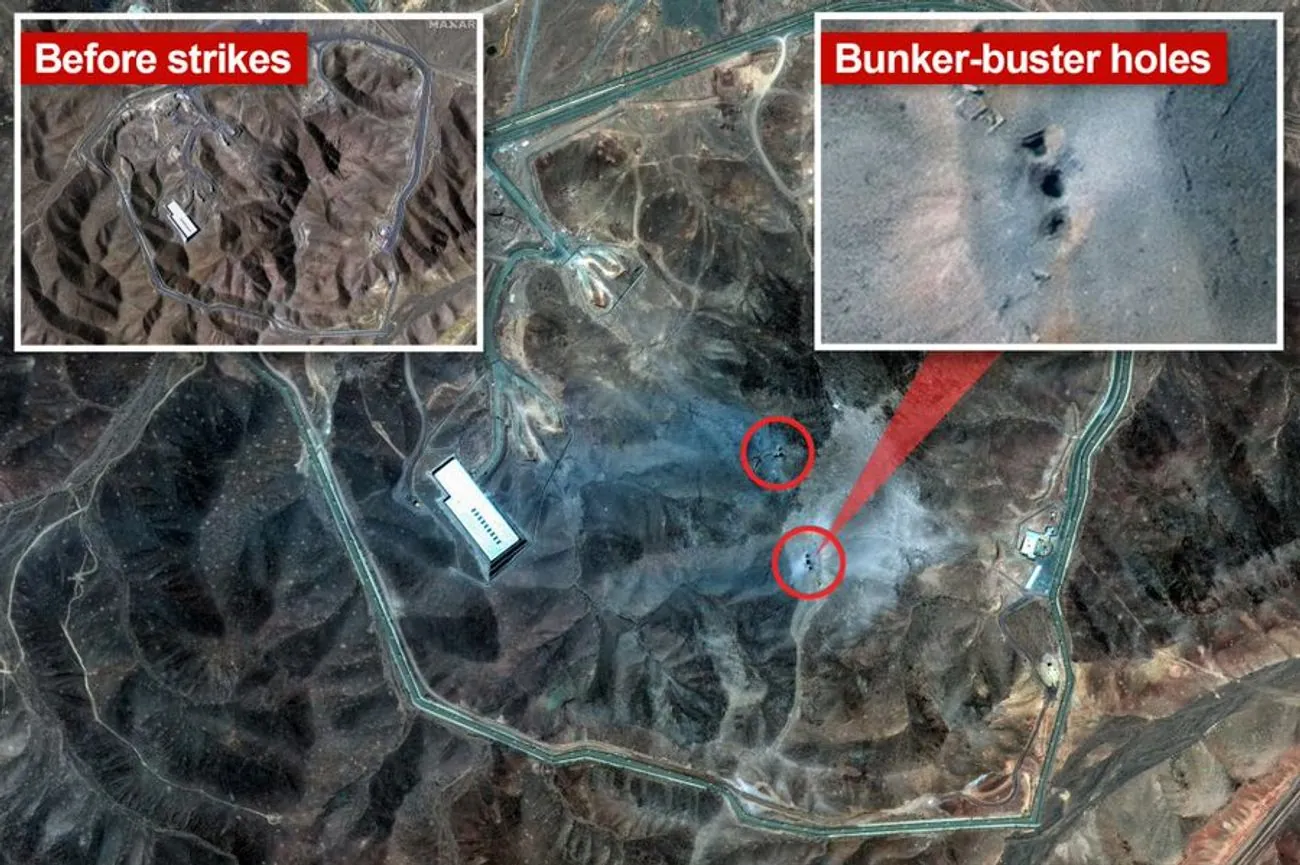
Satellite images show six holes, where are the bombs, that destroy bunkers, looks like, penetrated the mountain, and then to the ground, which looks covered in dust.
Several experts have also warned, that Iran, likely, removed a stockpile of weapons-grade highly enriched uranium from Fordow before the strike early Sunday morning and may be hiding it and other nuclear components in locations, unknown to Israel, nuclear inspectors of the United States and the United Nations. They noted satellite images from Maxar Technologies, that show “unusual activity” at Fordow on Thursday and Friday, with a long line of vehicles, waiting at the entrance to the facility. A senior source in Iran told Reuters on Sunday, that the greater part 60% highly enriched uranium, almost suitable for weapons, was moved to an unknown location before the US attack.
“I don't think, that you can do anything with great confidence, except to reject their nuclear program, perhaps, for several years, – said Jeffrey Lewis of the Middlebury Institute of International Studies in Monterey. – There are almost certainly objects, about which we do not know”.
Arizona Senator Mark Kelly, a Democrat and a member of the Senate Intelligence Committee, who said, that he reviewed intelligence every day, expressed the same concern. “Now I am most afraid, that they will hide this program”, – he told NBC News.
In response to Israel's attacks, Iran's parliament threatens to withdraw from the Nuclear Non-Proliferation Treaty, the cornerstone of the international system, which entered into force in 1970 year to prevent the spread of nuclear weapons, ceasing cooperation with the IAEA. “The world will be in the dark about it, what can iran do”, – said Daryl Kimball, Executive Director of the Arms Control Association Consumer Protection Group.
Reuters spoke with four experts, who viewed Maxar Technologies satellite images of Fordow, which show six neat openings on the mountain range, under which, as they think, there is a hall with centrifuges.
General Dan Kane, chairman of the Joint Chiefs of Staff of the United States, said, that seven B-2 bombers were shot down 14 GBU-57/B MOP, bombs, designed to damage fortified underground facilities, such as Ford. Kane said, that the initial estimates showed, that the objects have suffered extremely serious damage, but refused to talk about it, whether any nuclear facilities remained intact, writes the publication.
Eveleth said, that Maxar's Ford photos and Kane's comments indicate, that B-2s dropped an initial batch of six MOPs on Fordow, and “double clicked” six more in the same places. According to him, this operation “Midnight hammer” (Midnight Hammer) also targeted Tehran's main uranium enrichment plant at Natang, and struck Isfahan, where the country's largest nuclear research center is located. There are other nuclear facilities near the city.
Albright noted in a post at X, that Airbus Defense and Space satellite images showed, that American Tomahawk cruise missiles seriously damaged the uranium plant in Isfahan and created a breach above the underground enrichment plants in Natang, as reported, caused by a Massive Ordnance Penetrator burst bomb, which “probably, destroyed the shop”.
Albright questioned the US use of cruise missiles in Isfahan, stating, that this weapon cannot penetrate the complex of tunnels near the main nuclear research center, which, as they think, is even deeper, than Ford. The IAEA said, that the entrances to the tunnels “were influenced”. He noted, that Iran recently notified the IAEA of plans to establish a new uranium enrichment plant in Isfahan.
Source: https://unn.ua